
Introduction
In an era dominated by technological advancements, the accessibility of sophisticated apps and software has empowered users to manipulate images and videos with unprecedented ease. The most recent and concerning development in this digital landscape is the rise of deepfake technology, a product of the marriage between artificial intelligence (AI) and deep learning algorithms. This blend of "deep learning" and "fake" has ushered in a new wave of digitally manipulated media that blurs the lines between fiction and reality, posing a significant threat to privacy and security.
Deepfakes, crafted through the application of AI algorithms, enable the alteration or replacement of elements within videos, creating deceptively realistic content. The term itself originates from the underlying technology—deep learning, a form of AI that allows algorithms to teach themselves and solve problems by analysing vast sets of data. These manipulative capabilities extend to swapping faces in videos and digital content, giving birth to a new breed of deceptive media.
In this blog, we will delve into the world of deepfakes, unravelling the technology behind their creation, exploring notable examples, and discussing the far-reaching implications for individuals, society, and cybersecurity. From the risks associated with manipulated political content to the potential for exploitative adult imagery, the threat posed by deepfake technology cannot be ignored.
DECODING DEEPFAKE DYNAMICS: A DIVE INTO THE BASICS
Deepfake, a blend of "deep learning" and "fake," refers to a powerful aspect of artificial intelligence that crafts realistic but fake images, sounds, and videos. This technology combines complex deep learning processes with the creation of fabricated content, using algorithms to put together manipulated images and sounds. One key algorithm in this process is the Generative Adversarial Network (GAN), which carefully analyses and combines existing visual and audio data to generate highly realistic, entirely artificial content that can mimic the appearance and voice of real individuals.
Deepfakes, including manipulated videos, audio, and images, created using Artificial Intelligence, represent a highly realistic form of digital deception. Initially used for harmless entertainment, the widespread availability of tools and data has led to concerns about potential harm. While AI-generated synthetic media has benefits in education, film production, and more, the risk of misuse, including reputation damage and public deception, is escalating. Society must address ethical concerns, establish guidelines, and navigate the balance between creative innovation and potential misuse as it grapples with the implications of deepfake technology.
HOW ARE DEEPFAKES MADE?”
The creation of deepfakes involves intricate processes, with advancements in technology contributing to their heightened quality and potential threats. One prevalent method employs the use of generative adversarial networks (GANs), wherein a neural network studies patterns crucial for crafting convincing images. A machine learning algorithm is then derived from this analysis, and the precision of the algorithm relies on the volume of data used for training. Larger datasets, easily accessible on the internet, enhance the algorithm's accuracy, rendering the generated content almost indistinguishable from authentic data.
Two recent advancements have augmented the quality and threat posed by deepfakes.
- The first is the integration of generative adversarial networks (GANs), comprising generative and discriminating models. The discriminating model repeatedly tests the generative model against the original dataset, refining the generated content until it is nearly indistinguishable from the training data. This results in false images that slip away from the detection of the human eye, falling under the control of malicious actors.
- • The second threat emerges from the convergence of 5G bandwidth and the computing power of the cloud, facilitating real-time manipulation of video streams. This evolution enables the application of deepfake technologies in diverse settings, including videoconferencing, live-streaming video services, and television.
There are various tools and platforms that facilitate easy creation of deepfakes:
- Deepfake Software and Apps: Available in both free and commercial versions, these tools utilize AI algorithms to manipulate and replace faces or voices in videos with precision.
- Deepfake Maker Tools: Designed for users with minimal technical knowledge, these tools offer user-friendly interfaces and simplified workflows for easy deepfake generation.
- Deepfake Online Platforms: Cloud-based services accessible through web browsers provide the convenience of creating deepfakes without local installations.
- Deepfake GitHub Repositories: Open-source projects on platforms like GitHub host code, pre-trained models, and resources for developers and researchers working with deepfake technology.
TYPES OF DEEPFAKE TECHNOLOGY –
Deepfake technology, harnessed through the sophisticated Generative Adversarial Network (GAN) mechanism, presents various forms of manipulations, primarily focusing on images, videos, audio, and text.
- Deepfake Videos and Images: Common misuse involves altering or fabricating content, enabling malicious activities such as smear campaigns and disinformation dissemination.
- Audio Deepfakes: Manipulate voice samples, obtained from various sources, to mimic scripted content, with potential for real-time attacks.
- Textual Deepfakes: Involve written content that appears to be authored by an actual person, challenging detection due to the lack of clear indicators like visual inconsistencies or artificial tones in voices.
WHAT ARE DEEPFAKES USED FOR?
The applications of deepfake technology extend into various alarming realms, as evidenced by the surge in discussions on illicit forums and marketplaces, with threat actors actively exploring its potential. One prevalent misuse involves scams and hoaxes orchestrated by cybercriminals, who leverage deepfakes to fabricate false claims and undermine organizations. For instance, a malicious actor might create a deceptive video featuring a senior executive confessing to criminal activities, such as financial crimes, or making misleading statements about the organization. Beyond the immediate challenges of disproving such content, the ramifications could be severe, impacting the business's brand, public reputation, and share prices.
Another concerning use of deepfake technology is the creation of nonconsensual pornography, with up to 96% of deepfakes on the internet targeting celebrities. This poses a significant threat, contributing to the spread of hoax instances of revenge porn. The technology has also been exploited in instances of election manipulation, with deepfake videos circulating fake content involving world leaders like Donald Trump and Barack Obama, raising concerns about its potential impact on electoral processes. Social engineering scams employ deepfake technology in audio manipulations, deceiving individuals into believing that trusted figures have uttered statements they never made.
Moreover, deepfake technology facilitates identity theft and financial fraud by creating new identities or stealing those of real individuals. Attackers can forge false documents or mimic victims' voices, enabling them to establish accounts or make purchases while impersonating the targeted person. These multifaceted applications shows the urgency of addressing the potential threats posed by deepfake technology to privacy and security.
Read the survey article here -
Hindustan Times Article on Deepfake Technology.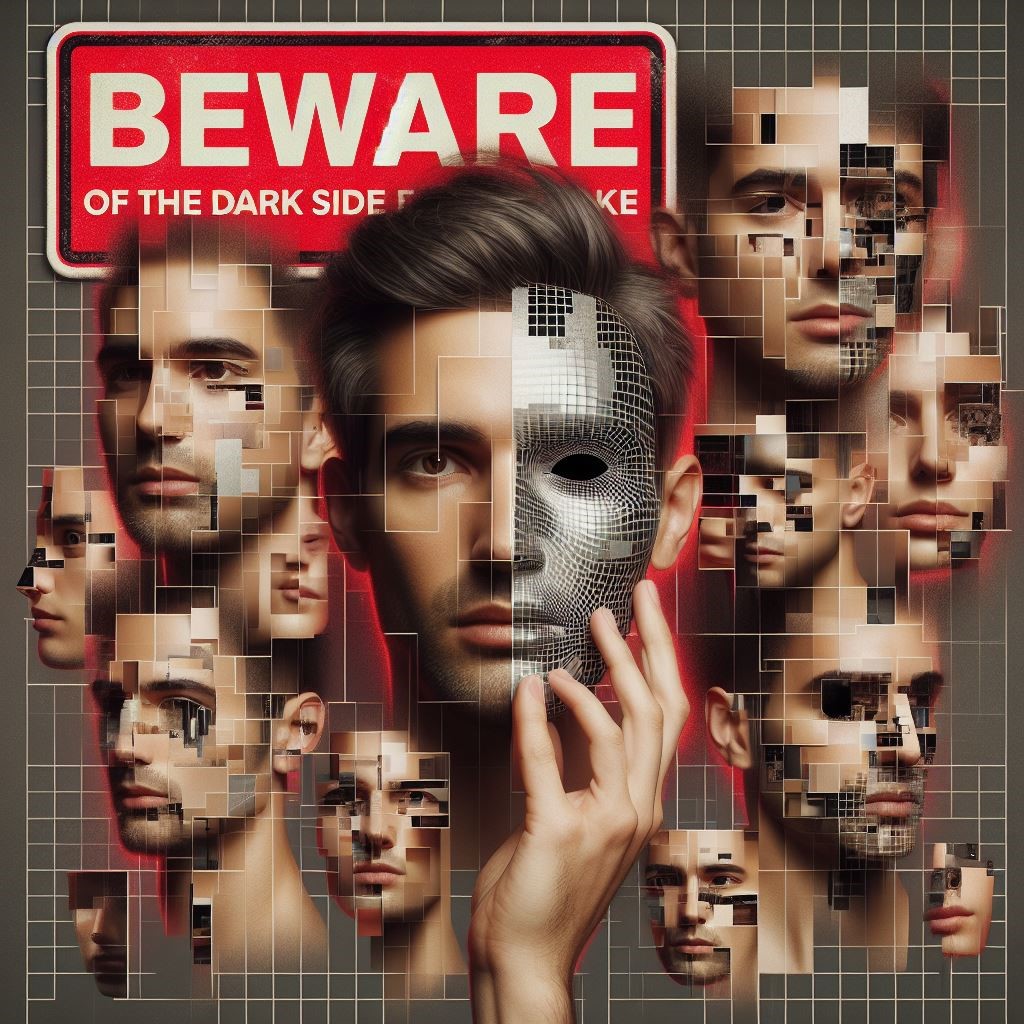
DARK SIDE OF DEEPFAKES
As deepfake technology continues to advance, its darker implications have come to the forefront, posing significant threats to privacy, security, and societal trust.
This section delves into the malicious applications of deepfakes, exploring how these hyper-realistic falsifications can be harnessed for deception, misinformation, and manipulation. From scams and identity theft to the manipulation of political narratives, the dark side of deepfakes unveils a landscape where individuals and institutions are vulnerable to exploitation. The more we uncover, the shady it becomes—a realm where scams, identity theft, and political tactics thrive. It's a world where the line between truth and illusion blurs, and the end seems elusive. The rise of deepfakes isn't just a technological marvel; it's a descent into the unknown, where the stakes for privacy and trust keep getting higher.
Spotting the Unseen: Challenges in Detecting Deepfakes
In this digital wilderness, the challenge to detect deepfakes unfolds like a gripping thriller. It's a race against time and evolving technology, where the endgame remains uncertain. As the technology propelling deepfakes reaches new heights, the means to expose them struggle to keep pace. The more sophisticated the fabrication, the tougher the quest to distinguish reality from illusion. The journey through detection challenges is a compelling narrative of innovation, resilience, and the pursuit of truth in a landscape where the boundaries of authenticity keep shifting.
Alterations to deepfake generation methods may fool existing detection systems, presenting difficulties in maintaining accuracy. The dynamic nature of these forgeries challenges traditional detection mechanisms. Textual deepfakes, unlike their visual and audio counterparts, pose a unique hurdle. They often lack noticeable signs of AI generation and are adept at bypassing language barriers, thanks to tools like ChatGPT. The quality of deepfakes surpasses human eye detection, necessitating advanced technological solutions. Detection methods include leveraging biological signals based on skin tone changes, facial movement analysis, and recurrent convolutional models searching for inconsistencies between video frames. As the deepfake landscape evolves, the pursuit of effective detection mechanisms becomes a crucial chapter in the ongoing battle between authenticity and manipulation.
The Implications of Deepfakes: Challenges and Concerns
The implications of deepfakes extend beyond harmless entertainment, raising legitimate concerns about the misuse of this technology. As a result, society is grappling with the emergence of deceptive practices, such as the spread of propaganda, misinformation, and what is now termed "Deep fake news." These digitally manipulated images and videos have the potential to deceive audiences into believing false narratives, eroding the foundations of truth and reality.
As the sophistication of deepfakes continues to grow, so do the concerns surrounding their impact on civil society and corporate entities. From influencing public opinion through disinformation campaigns to facilitating cyberattacks, the potential harm is vast. We find ourselves at a critical juncture where the unchecked increase of deepfake technology threatens to become a potent weapon for cybercriminals, undermining trust, and causing widespread societal and economic damage.
As the wave of deepfake technology surges, its implications extend across diverse sectors, reshaping the landscape and posing substantial challenges:
- Misinformation and Fake News: Deepfakes pose a significant threat to the credibility of information and can be used to manipulate public opinion, spread false narratives, or discredit individuals. The ability to fabricate convincing videos and audio recordings creates a breeding ground for misinformation, challenging the authenticity of content in the digital age.
- Identity Theft and Fraud: The unsettling potential of deepfake technology to convincingly impersonate individuals raises profound concerns about identity theft and fraud. Scammers can exploit this capability to deceive individuals, commit financial crimes, or gain unauthorized access to personal accounts, exploiting the trust inherent in visual and audio media.
- Political Manipulation and Disinformation Campaigns: Deepfakes emerge as powerful tools for political manipulation, capable of altering the course of elections, fabricating statements attributed to political figures, or creating compromising videos and audio recordings. The risk of disinformation campaigns fuelled by deepfakes threatens the foundational principles of democratic processes.
- Privacy and Consent: Deepfakes raise serious privacy concerns, challenging the fundamental right to privacy as individuals' faces and voices can be manipulated without their knowledge or consent. The erosion of trust in visual and audio media disrupts the traditional norms of consent, creating a volatile environment where personal boundaries are susceptible to breach.
In the face of these challenges, the implications of deepfakes ripple through society, challenging our understanding of truth, privacy, and security. As technology advances, the need for robust safeguards and countermeasures becomes imperative to mitigate the potential harms posed by this transformative yet perilous innovation.
DEFENDING AGAINST DEEPFAKES: PRACTICAL TIPS
The surge in deepfake content is alarming, as reported by startup Deeptrace, which noted a staggering 330% increase in the number of deepfakes on the web. This substantial rise occurred within the timeframe from October 2019 to June 2020, reaching a peak of over 50,000 instances.
To read more - https://regmedia.co.uk/2019/10/08/deepfake_report.pdf
The significant uprise in deepfakes shows the growing prevalence and potential impact of this technology, raising concerns about its misuse and the need for effective countermeasures to address the associated risks to privacy and security.
As we navigate the rising tide of deepfake threats, here are straightforward strategies to protect yourself:
- Media Literacy and Awareness: Stay informed about deepfake technology to spot manipulated content. Learning the basics of how deepfakes work empowers you to identify potential deception.
- Verify Sources: Before sharing or believing information, verify sources and check for authenticity. Rely on trusted news outlets and fact-checking organizations to confirm information.
- Cybersecurity Measures: Strengthen your online security with updated antivirus software, regular security patches, and device updates. Be cautious when downloading files or clicking on links to avoid potential malware.
Additionally, collective efforts and technological solutions that have been taking place:
- Social Media Rules: Major platforms like Facebook, Twitter, and YouTube are implementing rules and technologies to detect and remove deepfake content, especially during critical events like elections.
- Legislation: Several U.S. states have passed laws to criminalize deepfake activities, and national legislation, like the National Defense Authorization Act (NDAA), addresses the malicious use of deepfake technology, especially around important events like elections. These legislative measures contribute to a comprehensive strategy against potential harms posed by deepfakes. Hence every country should strive towards implementing legislations that protect their citizens from digital crimes like these.
CONCLUSION – NAVIGATING THE FUTURE OF DEEPFAKE TECHNOLOGY
In this deepfake technology, its trajectory raises critical concerns about the future. Presently, deepfake production is advancing at a pace that outstrips the evolution of detection methods, posing a significant challenge for society and corporations alike. Despite ongoing efforts by technology companies to combat deepfakes, creators often find innovative ways to elude detection and continuously refine their methods. This constant struggle underscores the pressing need for advancements in detection technology to keep pace with the rapid maturation of deepfake production.
The evolving threat landscape necessitates a comprehensive legal framework to address the dangers posed by deepfakes. With the enactment of the India's DPDP Act 2023, it’s a step towards controlling the illicit use of data. While the DPDP Act itself may not directly eliminate deepfakes, it creates a legal framework that could indirectly discourage their creation and misuse. Its effectiveness will depend on further regulations, technical advancements, and social awareness efforts.
The Indian Government is actively considering specific regulations to target deepfakes, signalling a commitment to combatting this harmful technology. MeitY has issued advisories urging intermediaries to adhere to IT rules, with a particular focus on addressing AI-driven misinformation, notably deepfakes. The guidance emphasizes the necessity of clearly communicating prohibited content in accordance with Rule 3(1)(b) and underscores the significance of user awareness achieved through terms of service and user agreements. It highlights the obligation for intermediaries to inform users about their rules, regulations, privacy policies, and user agreements in a language of their preference. The rule outlines a range of prohibited content, encompassing misinformation, threats to national security, and violations of laws.
To know more: https://pib.gov.in/PressReleaseIframePage.aspx?PRID=1990542
In conclusion, the trajectory of deepfake technology prompts a call to action. It is imperative to recognize the urgency in fortifying our defenses, both legally and technologically, to safeguard against the impending challenges posed by this rapidly advancing technology. The future demands not only vigilance but proactive measures to ensure the responsible use of AI and navigate the technology of deepfakes effectively. The road ahead may be complex, but the preservation of trust, truth, and privacy is essential for the well-being of individuals and the resilience of democratic societies.
We at Data Secure (DATA SECURE - Privacy Automation Solution) can help you to understand Privacy and Trust while dealing with personal data and provide Privacy Training and Awareness sessions in order to increase the privacy quotient of the organisation.
We can design and implement RoPA, DPIA and PIA assessments for meeting compliance and mitigating risks as per the requirement of legal and regulatory frameworks on privacy regulations across the globe especially conforming to India Digital Personal Data Protection Bill 2021. For more details, kindly visit DPO India – Your outsourced DPO service (dpo-india.com).
For any demo/presentation of solutions on Data Privacy and Privacy Management as per EU GDPR, CCPA, CPRA or Draft India PDPB 2019 and Secure Email transmission, kindly write to us at info@datasecure.ind.in or dpo@dpo-india.com.
For downloading various Global Privacy Laws kindly visit the Resources page in Resources (dpo-india.com)